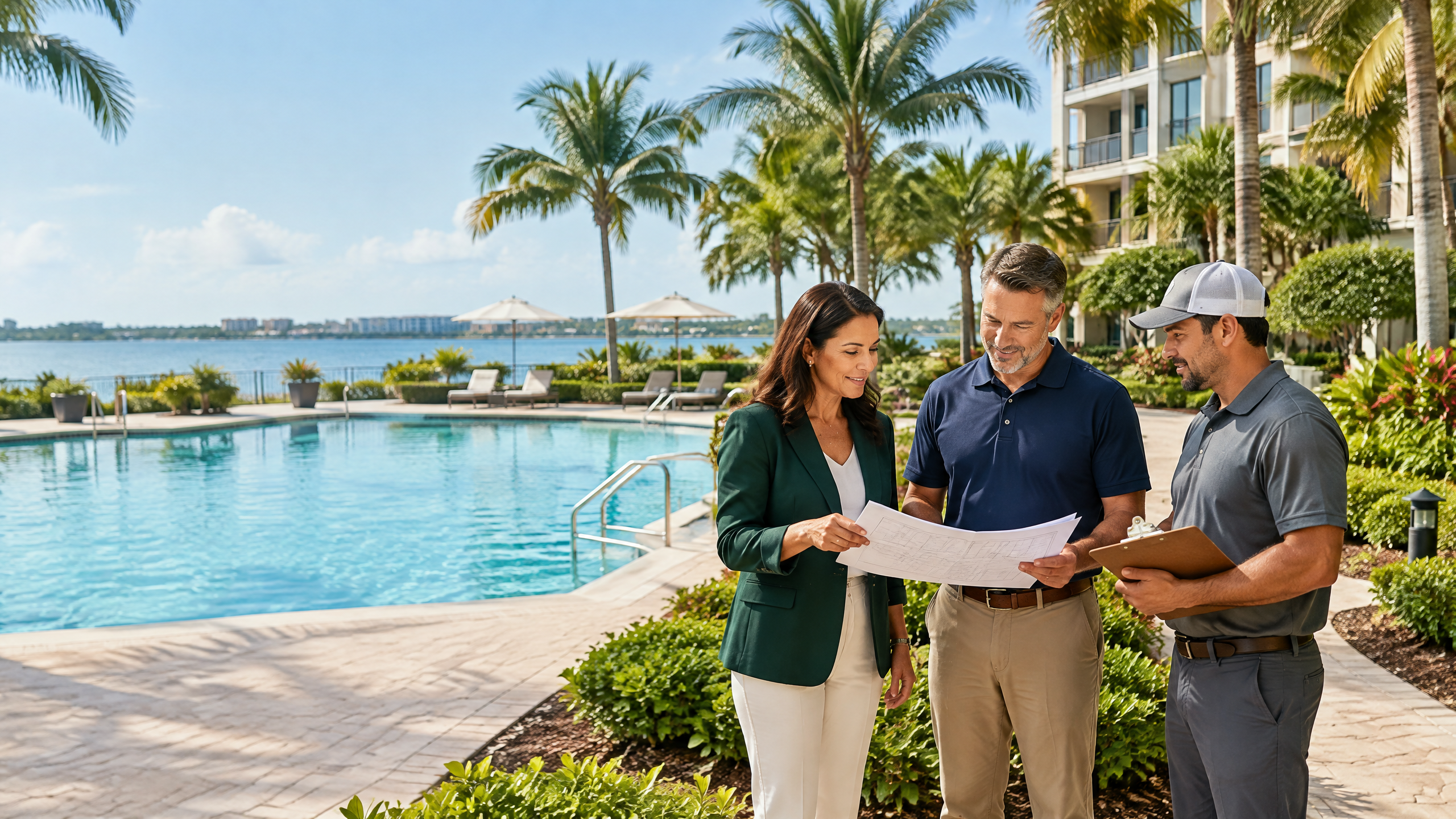
From landscaping and pool areas to vendor proposals and storm-season preparation, effective maintenance coordination helps Charlotte County boards turn approved priorities into documented follow-through.
Start With the Board’s Priorities
Maintenance coordination works best when the board has a clear view of its priorities: safety, appearance, recurring repairs, capital needs, and owner concerns. Management can help organize those priorities into a practical sequence, but the board remains responsible for directing association decisions. A well-defined list gives vendors clearer information and helps prevent urgent issues from crowding out important routine work.
Create a Documented Vendor Process
For work authorized by the board, a sound coordination process can include requesting information or proposals, confirming scope expectations, scheduling access, tracking updates, and keeping the board’s records organized. Documentation matters because it helps the association understand what was approved, what has been completed, and what still requires direction. It also gives future board members a more useful operating history.
Plan for Florida’s Day-to-Day Conditions
Charlotte County communities often manage irrigation, landscaping, pool areas, exterior surfaces, drainage, roofs, and other common components exposed to heat, rain, wind, and seasonal weather. A local maintenance calendar should be shaped by the association’s governing documents, vendor agreements, budget, and the actual condition of the property—not by a generic checklist alone.
Build Storm Readiness Into Routine Work
Storm readiness is easier when it is part of regular planning. Boards can review emergency vendor contacts, confirm how common areas will be secured, identify records and photographs that should be current, and understand how owner communications will be handled if conditions change. A CAM partner can help organize those preparations and coordinate board-approved response steps after a weather event.
Keep Owners Informed Without Overpromising
Owners do not need every vendor detail, but they do need clear, timely information when common-area work affects access, amenities, parking, or safety. Straightforward notices that explain what is happening, when it is expected to occur, and where owners can direct questions build confidence while avoiding speculation about matters still under review.
How PHS Coordinates Maintenance
PHS helps boards in Punta Gorda and immediate Charlotte County communities organize maintenance needs, coordinate vendor activity at the board’s direction, document follow-through, and communicate with owners. Our local team brings practical CAM field experience and disaster-recovery perspective to the daily work of protecting a community’s common areas.